Posaune
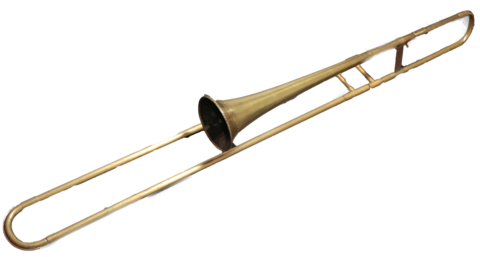

The invention of the double-slide trombone cannot be dated with precision. It is nevertheless evident that, by the end of the fifteenth century, a larger and more practical brass instrument equipped with a double slide had been incorporated into the Alta Capella, serving as an alternative to the slide trumpet for contratenor parts. The double-slide mechanism, providing seven rather than four chromatic positions, also served to bridge the interval of a fifth between the second and third partials of the harmonic series. This expanded range made it possible to perform substantially lower tenor and, increasingly, bass parts, which were simultaneously becoming more prominent within the developing polyphonic texture.
Among European musical instruments, the trombone is remarkable for having undergone comparatively little development or structural alteration since its emergence. In principle, the modern orchestral trombone differs from its Renaissance predecessor primarily in its considerably larger bore and heavier construction, together with a proportionally broader bell. Its basic operating principle—and indeed even its overall length—has remained essentially unchanged for more than five centuries.