Lira da braccio
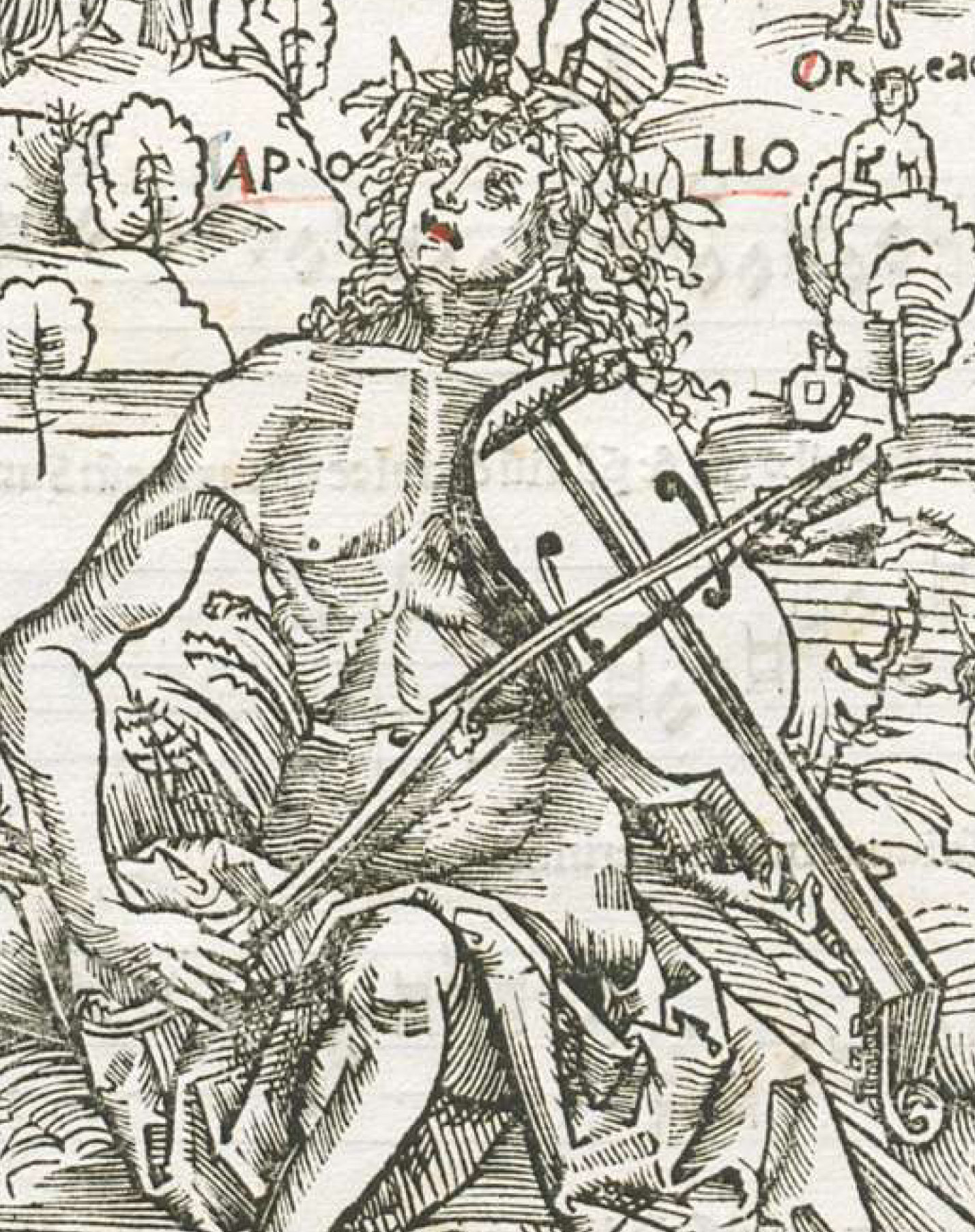
Woodcut from Melopoiæ sive Harmoniæ tetracenticæ, Augsburg: Erhard Oeglin, 1507. Copy: Bavarian State Library, Munich, D-Mbs Rar. 291, fol. 137r.
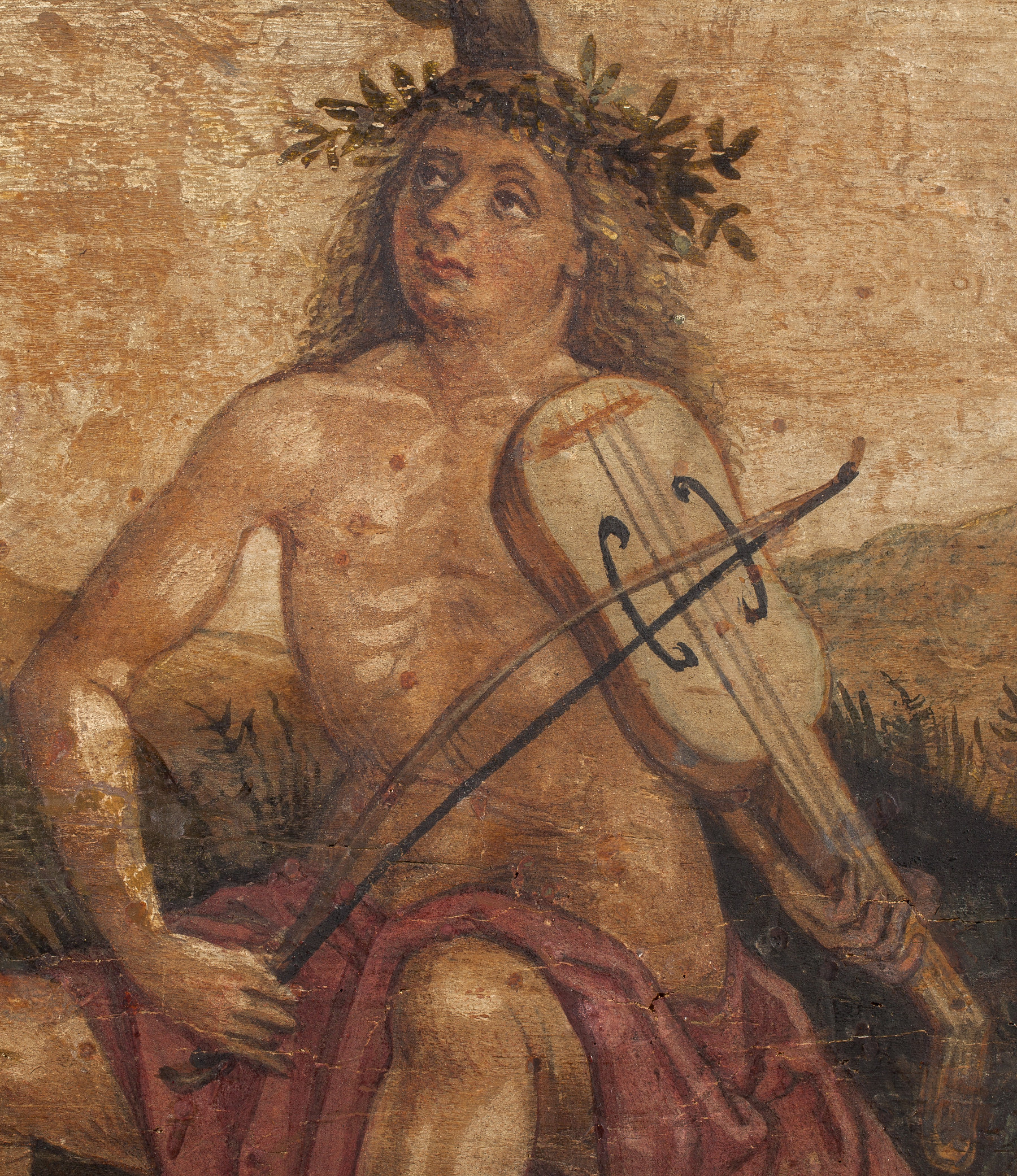
Celtis chest of 1508 (Albrecht Dürer) with Apollo playing lira da braccio.
Photo: René Steyer

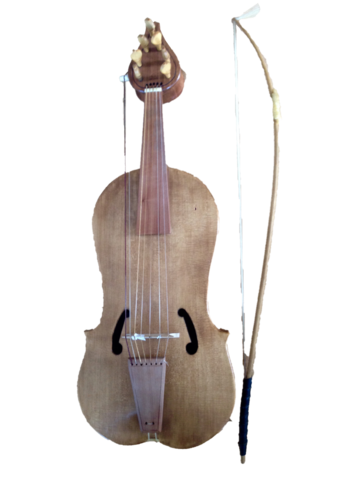
The lira da braccio is a further development of the medieval vielle (fiddle) and can be found in northern Italy from the mid-15th century onwards. It belongs to the group of early ‘Orphean instruments’, such as the cetra, and was used to accompany monophonic and recitative singing as well as dance music. Thanks to a relatively flat bridge and a re-entrant tuning, several strings could be bowed simultaneously with a bow of low hair tension, thereby producing an accompaniment of chordal sounds which contemporaries associated with the effect of the ancient lyre. With its seven strings – a deliberately allegorical number modelled on that of the kithara – it allows not only for specific chord progressions and the use of drones, but also for melodic playing within certain limits. Its da gamba counterpart is the lira da gamba, invented shortly after 1500, and the later larger version, the lirone, which can be used even more flexibly for chordal accompaniment.
The only source containing notated examples for the instrument is the relatively late Pesaro manuscript (I-PESo 1144), which nevertheless gives an impression of the instrument’s potential uses.
The lira da braccio on „Geschichtsfenster“: https://www.youtube.com/watch?v=mrAq5WLU91I&t=6224s