Cetra
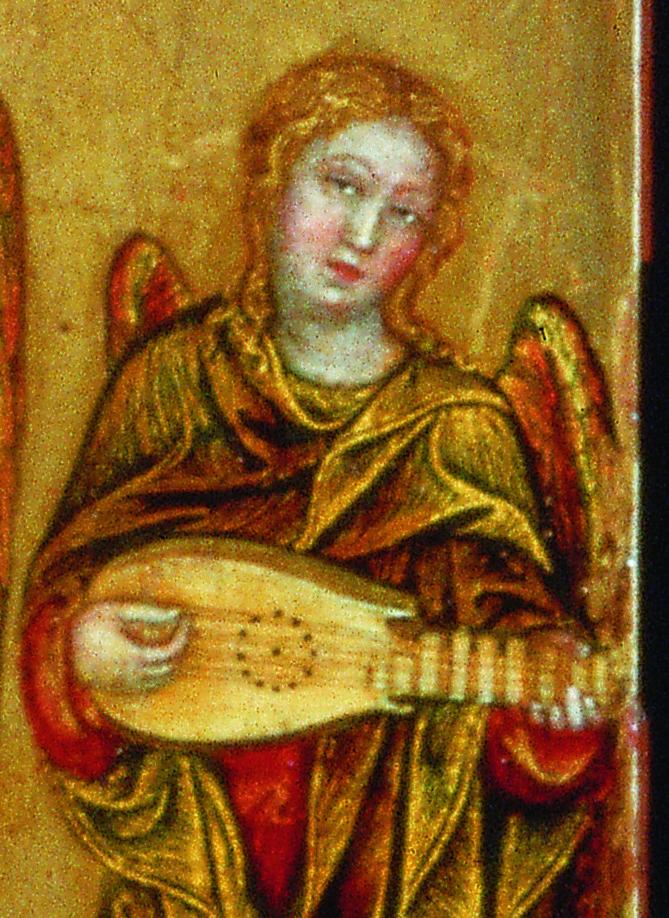
Angel with a cetra. Detail of the Valle Romita Polyptych by Gentile da Fabriano (c. 1400).

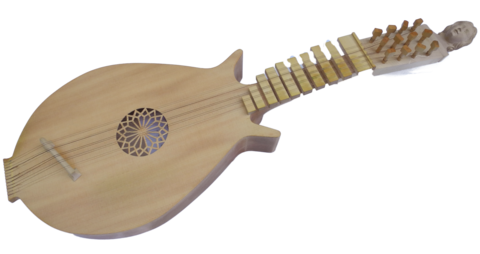
The 15th-century cetra is an instrument of Italian Humanism that evolved from 13th- and 14th-century precursors. It was presumably used to accompany recitation performances based on ancient models, as well as for monophonic songs associated with the ‘Giustiniane’ repertoire and precursors to the later frottole as well as dance songs. It can be interpreted as an early ‘Orphean instrument’ and was one of the few instruments of that period which – according to Johannes Tinctoris – had metal strings. He also described an (ambiguous) ‘re-entrant’ tuning for the instrument with four courses; this was probably related to 16th-century cittern tunings, and the instrument was played with a plectrum. Typical features of the cetra include wings on either side of the neck, intended to resemble the former yoke arms of the kithara, a pegbox featuring a woman’s head, and the prominent block frets.
Link to the review of the ‘tagweiss’ on the Supplement blog.
The cetra on „Geschichtsfenster“: https://www.youtube.com/watch?v=mrAq5WLU91I&t=5202s